

Soil Mulching to Reduce Water Evaporation in Kuwait Gardens
Water is considered one of the main challenges facing garden owners in Kuwait, as the desert climate and high temperatures throughout the year lead to increased rates of water evaporation from the soil. This exposes plants to drought and affects the sustainability of green spaces. Therefore, the idea of soil mulching has emerged as a practical and smart solution to reduce water loss and maintain soil moisture for longer periods.
Mulching is not just a decorative step, but an environmental technique that provides multiple benefits, most notably protecting plants from drought, conserving water, and improving soil health. Whether using natural materials such as wood chips and straw, or alternatives such as gravel and organic covers, the result is the same: reduced water waste and a healthier growing environment.
In Kuwait’s gardens, where many homeowners and villa owners rely on regular irrigation systems, mulching can reduce the need for frequent watering, which in turn reduces costs and saves effort. This method also contributes to environmental sustainability by limiting excessive water consumption, which is critical in light of limited water resources.
In this article, we will review the best methods and techniques of soil mulching to reduce evaporation in Kuwait’s gardens, with a detailed explanation of the advantages of each method, the most commonly used materials, and practical steps for achieving a lush green garden despite the harsh climate.
Methods of Mulching to Preserve Soil Moisture in Kuwait Gardens
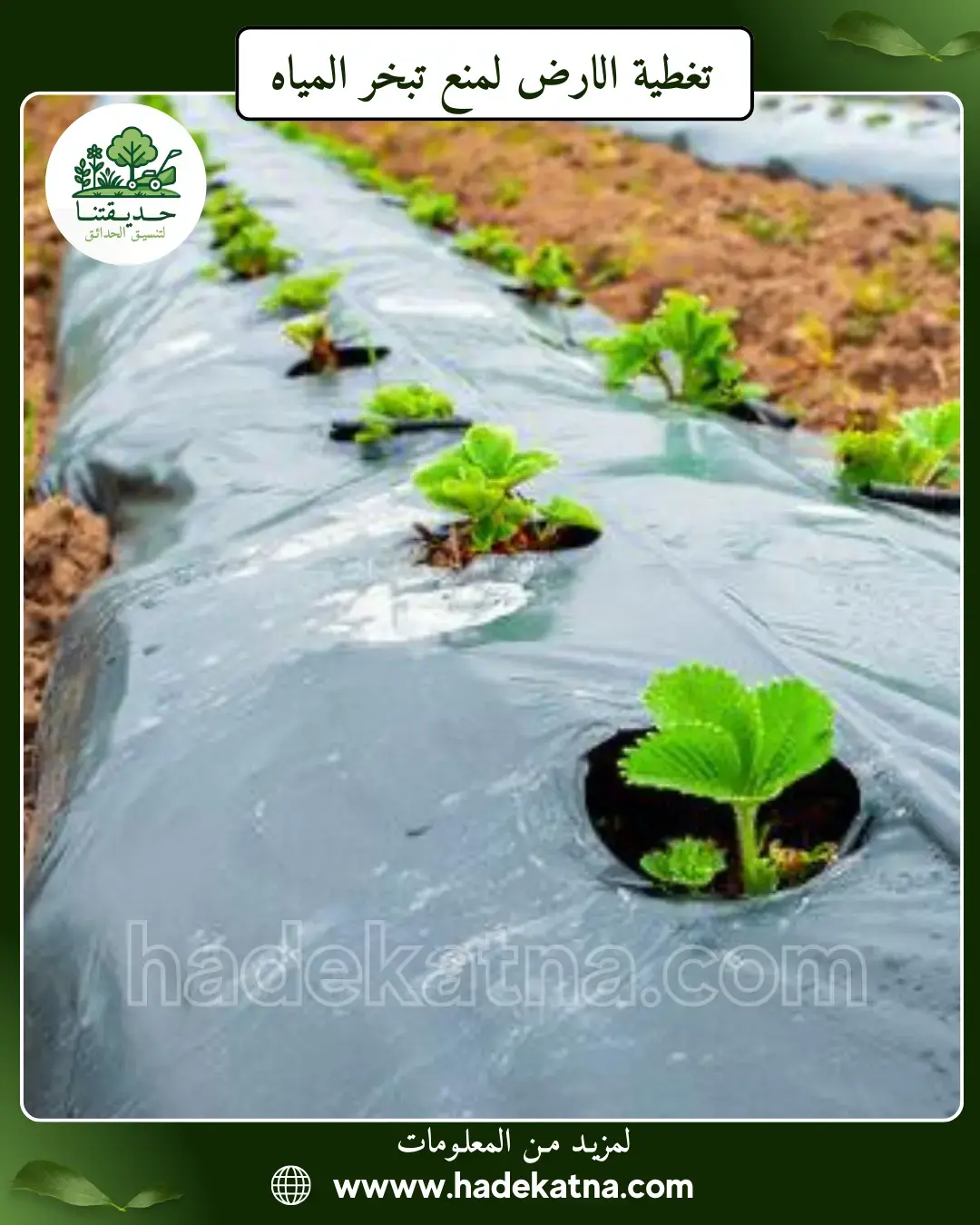
Soil mulching has become one of the most reliable ways for garden owners in Kuwait to combat water evaporation. The main goal of this process is to protect the soil from direct sunlight and reduce moisture loss, helping plants stay green for longer periods. Some of the most important mulching methods include:
-
Organic mulch: such as wood chips, dried leaves, and bark, which decompose over time and enrich the soil with organic matter.
-
Straw mulch: a traditional and effective method that reduces evaporation and lowers soil temperature.
-
Gravel or pebbles: provide an aesthetic look while reducing water evaporation, especially in open areas.
-
Plastic mulch film: a thin layer covering the soil that minimizes water loss, though it requires regular monitoring.
-
Composite organic mulch: a mixture of organic compost with a layer of chips to enhance effectiveness.
-
Agricultural fabrics: used to cover small plant beds, significantly reducing evaporation.
-
Combination methods: mixing gravel with organic mulch to achieve both aesthetic and water-saving benefits.
Applying these methods in Kuwait’s gardens reduces the need for daily watering and helps plants better withstand harsh weather, ensuring sustainable greenery at minimal cost and effort.
Best Practices to Reduce Water Evaporation in Kuwait Gardens
With scarce water resources and extreme heat in Kuwait, finding ways to reduce water evaporation has become essential. While mulching is the foundation, several integrated practices can further enhance efficiency:
-
Watering at the right times (early morning or evening).
-
Using organic mulch to insulate soil surfaces and retain moisture.
-
Applying black plastic covers to prevent evaporation while regulating soil temperature.
-
Planting shade-providing trees and shrubs.
-
Installing modern irrigation systems such as drip or subsurface irrigation.
-
Adding gravel layers to protect the soil from hot air exposure.
-
Using organic compost to improve soil’s water retention capacity.
-
Arranging plants in a consistent pattern to minimize exposed soil.
-
Covering flower beds with straw to retain moisture and reduce weeds.
When combined, these practices form an integrated plan to reduce evaporation in home gardens across Kuwait, providing a practical solution to conserve water and maintain garden beauty despite the harsh climate.
Using Wood Chips for Mulching in Kuwait Gardens
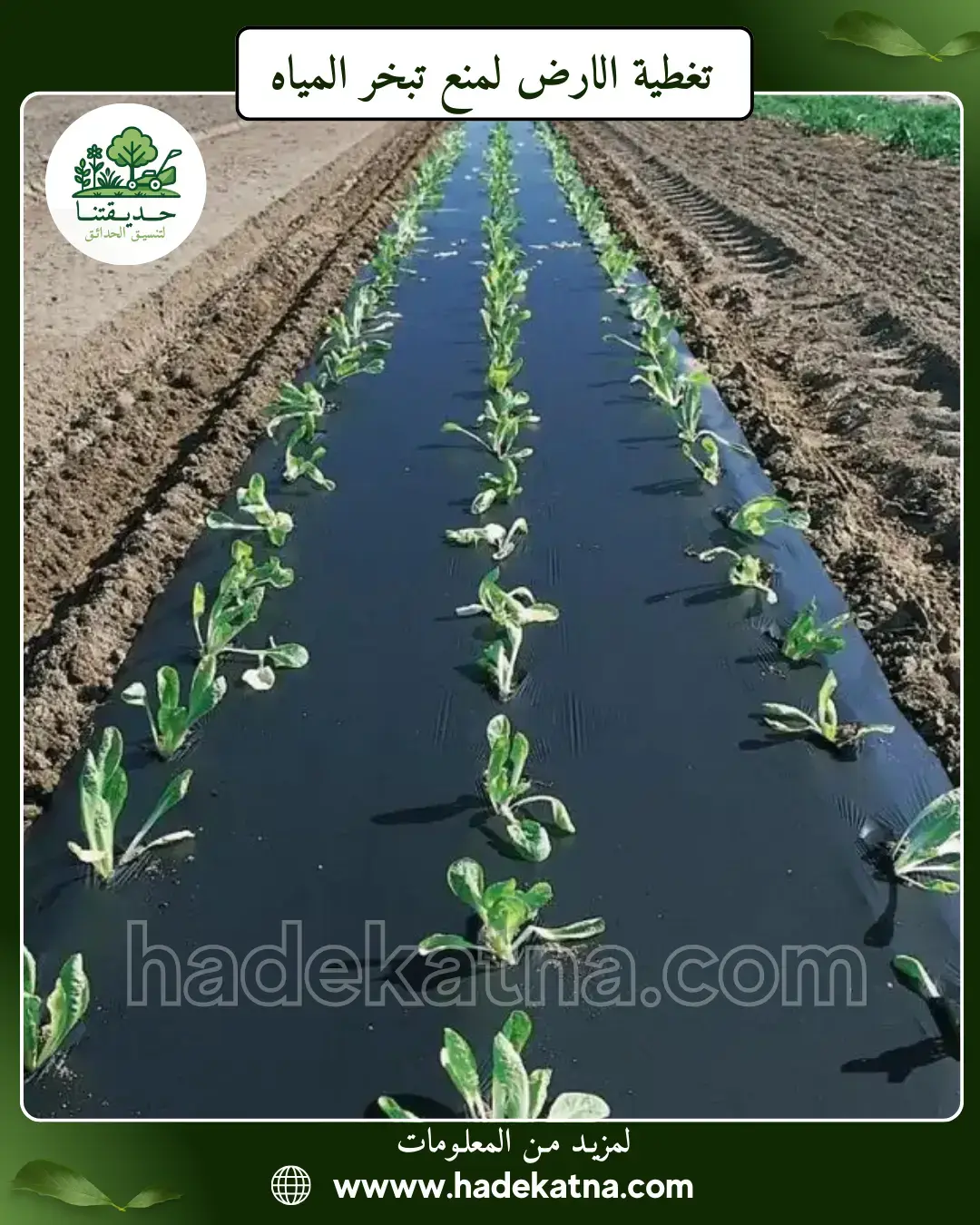
Wood chips are one of the most effective natural materials for mulching and reducing evaporation, especially in Kuwait’s hot climate. Affordable and widely available, wood chips offer multiple benefits:
-
Reduce water evaporation by insulating the soil surface.
-
Retain soil moisture for longer, minimizing daily irrigation needs.
-
Improve soil quality as they slowly decompose, adding nutrients.
-
Suppress weed growth by blocking sunlight from reaching seeds.
-
Regulate soil temperature, keeping it cooler during the day and warmer at night.
-
Enhance aesthetics with a natural, neat appearance.
-
Easy to apply around trees, shrubs, or beds.
-
Cover bare patches, preventing soil dryness.
-
Suitable for fruit trees and vegetable beds.
By using wood chips, garden owners in Kuwait can balance water conservation with visual appeal, making it a practical and sustainable choice.
Covering Soil with Straw to Reduce Water Loss in Kuwait Gardens
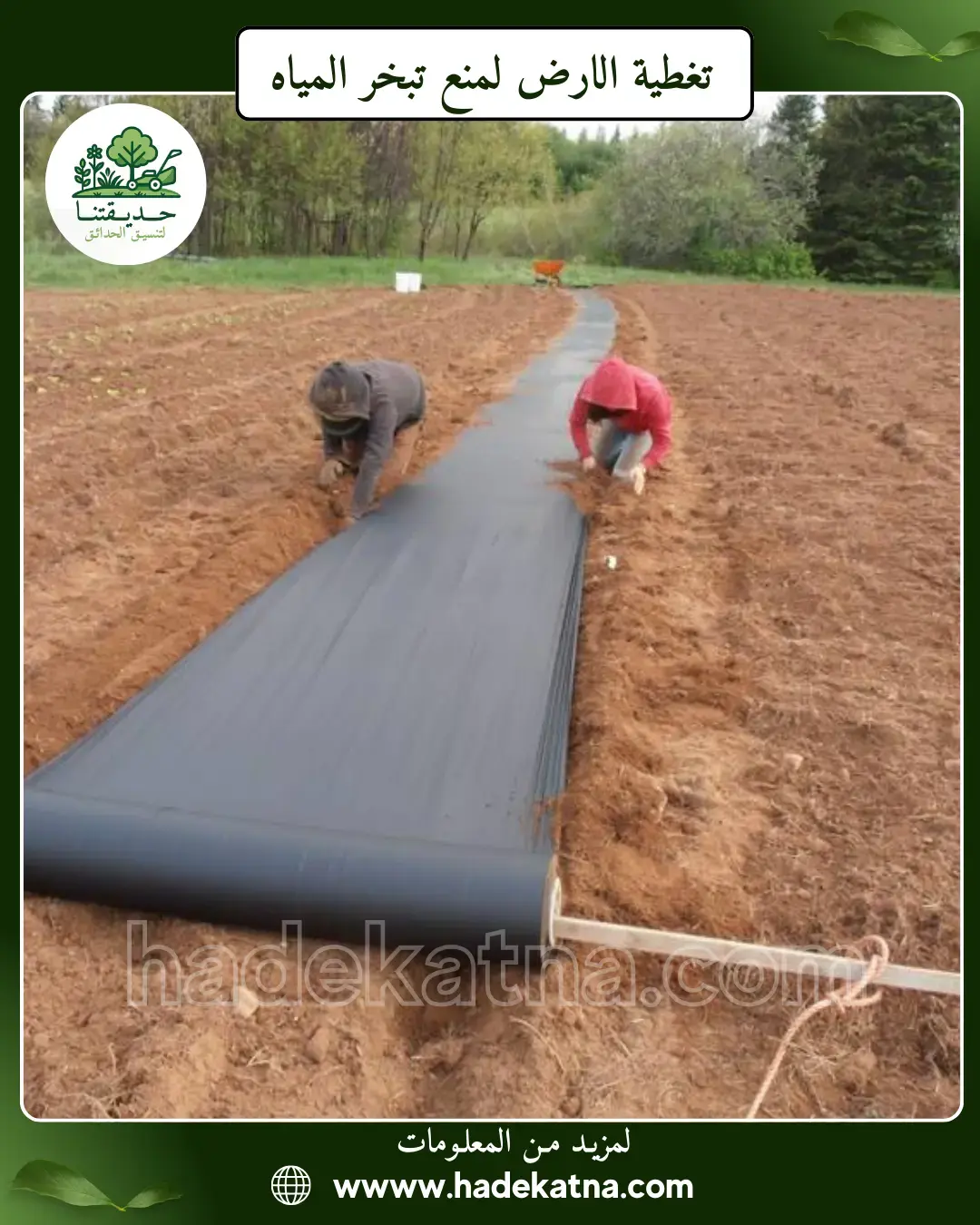
Straw has long been used to protect soil from drying out, and it remains a highly effective method in Kuwait’s home and agricultural gardens. Its key benefits include:
-
Acts as a natural barrier against direct sunlight.
-
Slows evaporation and keeps roots moist longer.
-
Creates a stable environment for plant growth.
-
Protects soil from erosion caused by wind.
-
Recycles agricultural waste cost-effectively.
-
Easy to spread over beds and open spaces.
-
Reduces weed growth by limiting light exposure.
-
Gradually decomposes into organic matter that enriches the soil.
-
Suitable for both large farms and small gardens.
Straw is both eco-friendly and economical, making it a valuable solution for water-saving and sustainability in Kuwait’s gardens.
Practical Solutions to Reduce Soil Water Evaporation in Kuwait
With Kuwait’s extreme heat and high evaporation rates, practical solutions are essential. The most effective methods include:
-
Mulching with organic materials like wood chips and bark.
-
Using plastic film mulch to block evaporation, especially for vegetables.
-
Applying straw for an economical moisture barrier.
-
Covering exposed areas with gravel for durability and aesthetics.
-
Installing drip irrigation for targeted watering.
-
Planting ground cover species to act as natural mulch.
-
Enriching soil with compost to improve water retention.
-
Creating natural windbreaks with trees and shrubs.
-
Watering at cooler times of the day.
Combining these approaches ensures maximum efficiency and helps Kuwait’s gardens stay green despite the desert climate.
Importance of Mulching to Keep Plants Green in Kuwait
Plants in Kuwait face major challenges due to heat and dryness. Mulching is one of the most effective ways to keep them healthy and green by:
-
Reducing water loss through evaporation.
-
Maintaining a healthy environment for roots.
-
Protecting plants from heat stress.
-
Extending irrigation intervals.
-
Preventing weeds from competing for nutrients.
-
Enriching soil fertility when organic mulch decomposes.
-
Stabilizing soil and preventing erosion.
-
Enhancing garden aesthetics with an organized look.
Thus, mulching strikes a balance between water conservation and plant protection, ensuring greener, more sustainable gardens.
Ways to Conserve Water Through Mulching in Kuwait
Given Kuwait’s limited water resources, conservation is vital. Mulching plays a key role by:
-
Using organic materials like wood chips and bark.
-
Applying straw as a low-cost option for large areas.
-
Covering with gravel for both moisture retention and decoration.
-
Using agricultural fabrics to reduce water loss while allowing airflow.
-
Employing plastic films to cut evaporation and control weeds.
-
Combining different materials for optimal results.
-
Planting ground cover vegetation as a natural shield.
-
Adding compost for improved soil moisture capacity.
-
Adjusting irrigation schedules to save up to 40% water.
These methods make gardens more sustainable while reducing water costs.
Covering Large Landscapes to Reduce Evaporation in Kuwait
Large green areas such as lawns and seasonal crops are directly affected by Kuwait’s extreme heat. Mulching here is essential:
-
Organic mulch like crop residues or bark.
-
Straw for wide coverage at low cost.
-
Gravel for durability and modern appeal.
-
Plastic mulch films for vegetable production.
-
Agricultural fabrics that allow water and air flow.
-
Ground cover plants to naturally protect soil.
-
Compost layers to enhance fertility and water retention.
-
Combining multiple methods for best results.
This ensures sustainable greenery across Kuwait’s wide landscapes while conserving water.
Best Mulching Materials to Protect Plants from Drought in Kuwait
Choosing the right mulch is critical for success in Kuwait’s hot climate:
-
Wood chips: natural, effective, and nutrient-adding.
-
Straw: economical and effective for large areas.
-
Gravel/pebbles: decorative and practical for beds and walkways.
-
Plastic mulch: highly effective for small crops, but requires care.
-
Agricultural fabrics: balance between airflow and moisture retention.
-
Crop residues: low-cost, eco-friendly option.
-
Compost: improves both fertility and water retention.
-
Fine sand layers: natural but less effective.
-
Mixing materials: combining mulch types for both beauty and function.
The ideal choice depends on plant type, garden size, and budget.
Role of Mulching in Preserving Plant Moisture in Kuwait
Mulching directly supports plants by:
-
Protecting roots from drying.
-
Reducing irrigation frequency.
-
Stabilizing soil temperature.
-
Improving nutrient absorption.
-
Supporting stronger plant growth.
-
Reducing fertilizer loss.
-
Extending plant lifespan.
-
Preventing leaf and flower damage.
Thus, mulching is not just decorative but essential for plant survival in harsh climates.
Using Gravel to Reduce Evaporation in Kuwait Home Gardens
Gravel is a popular mulch in Kuwait for both its practicality and aesthetics:
-
Reduces evaporation by insulating soil.
-
Keeps soil moist longer.
-
Provides a neat, modern look.
-
Prevents soil erosion from wind.
-
Easy to clean after dust storms.
-
Suitable for all garden sizes.
-
Acts as a thermal buffer.
-
Suppresses weed growth.
-
Available in various sizes and colors.
Gravel offers both decorative and functional benefits, making it ideal for modern home gardens.
Organic Mulching to Reduce Water Loss in Kuwait Gardens
Organic-rich soil in Kuwait is vulnerable to evaporation, making organic mulching vital:
-
Compost: retains moisture and nourishes soil.
-
Dry leaves: form a thick layer that decomposes into nutrients.
-
Crop residues: like corn stalks or vegetable waste.
-
Wood chips: improve soil quality and moisture.
-
Dry organic fertilizer: doubles as mulch and nutrition.
-
Gradual decomposition: restores soil fertility naturally.
-
Weed suppression: blocks sunlight from weed seeds.
-
Soil structure improvement: better aeration and retention.
-
Versatility: suitable for all scales of gardening.
Organic mulching achieves water conservation, soil enrichment, and plant sustainability simultaneously.
How Mulching Supports Garden Sustainability in Kuwait
Kuwait’s desert climate demands smart strategies. Mulching ensures:
-
Soil moisture retention.
-
Lower water consumption.
-
Longer plant life.
-
Improved soil fertility with organic materials.
-
Soil erosion prevention.
-
Reduced weed competition.
-
Stable soil temperatures.
-
Neat, aesthetic gardens.
-
Long-term sustainability.
Thus, mulching is a long-term investment in garden sustainability.
Reducing Water Waste in Kuwait Gardens Through Mulching
Water is precious in Kuwait, and mulching helps reduce waste:
-
Saves up to 40% of irrigation water.
-
Reduces daily watering needs.
-
Prevents deep water loss.
-
Improves irrigation efficiency.
-
Preserves dissolved fertilizers.
-
Keeps moisture longer.
-
Promotes sustainable planting.
-
Can be done with low-cost materials.
-
Cuts water bills for homeowners.
Mulching is an eco-friendly and economical method for sustainable gardens.
Eco-Friendly Mulching Solutions to Reduce Evaporation in Kuwait
Sustainable gardening in Kuwait requires eco-friendly approaches:
-
Using natural materials like straw and wood chips.
-
Recycling agricultural waste into mulch.
-
Applying compost for dual benefits.
-
Planting ground cover species.
-
Using natural gravel for durability.
-
Combining solutions for greater effect.
-
Reducing plastic use in favor of biodegradable materials.
-
Raising awareness among homeowners.
-
Integrating mulching with modern irrigation.
These solutions make gardens greener, more sustainable, and environmentally friendly.
FAQs
1. What is the main benefit of mulching in Kuwait gardens?
The main benefit is reducing water evaporation and retaining soil moisture for longer, which decreases irrigation needs and helps plants resist drought.
2. What are the best mulching materials for Kuwait’s climate?
Organic mulch (wood chips, leaves), straw for large areas, gravel for decorative beds, and compost for improving fertility.
3. Does mulching reduce weed growth?
Yes, by blocking sunlight, mulch prevents weed germination and reduces unnecessary water consumption.
4. Can plastic mulch be used in Kuwait?
Yes, it significantly reduces evaporation but needs constant monitoring to avoid soil suffocation. Eco-friendly alternatives are preferable.
5. How does mulching save water?
By minimizing evaporation, extending soil moisture retention, and reducing irrigation frequency by up to 40%.
Kuwait’s home gardens are green oases amid a desert climate, but maintaining them requires innovative solutions against water evaporation. Mulching is one of the most effective strategies, providing plants with the ideal environment for moisture retention and health while significantly reducing water use.
Using natural materials such as straw, compost, wood chips, or gravel gives homeowners the chance to enjoy sustainable greenery without frequent irrigation. More than just an anti-evaporation measure, mulching integrates water conservation, soil improvement, weed control, and decorative benefits. With these strategies, Kuwait’s gardens can remain vibrant and sustainable year-round despite harsh climatic conditions.


